How to draft a press release when the client has nothing to give you
 Gabriel Tan
Founder and Strategy Lead · AIGP (IAPP) · Lean Six Sigma Green Belt
A ghostwriter asked Reddit whether he should invent his client's opinions
A ghostwriter on r/PublicRelations asked this month whether inventing a client's opinions is normal in this job. His new client wanted thought leadership in trade publications, rejected his first draft for carrying "no strong opinion or insight", then offered nothing to replace it. His question: "Are you going to provide that to me or do you want me to make up your opinions?"
The top reply, the most upvoted in 38 comments, told him to write out every question the piece needs answered, then interview the exec. Good advice, and it only partially solves the problem. Last week we drafted a press release for an announcement whose facts were not yet final, and the missing part is what got the questions answered.
Why the client cannot brief the press release he asked you to write
Most consultants read this client as lazy. He is not lazy. He is busy, or he cannot visualise what you need from him, and the diagnosis matters because the fix depends on it.
He has the opinion, or at least the raw material of one. What he cannot do is picture the finished product, so he cannot tell you what belongs in a thing he cannot yet see.
This is why the interview-first advice, sound as it is, keeps failing in practice. Send a busy director ten questions in a blank email and the reply is some version of "what am I answering this for?" The questions are fine. They have nothing to refer to, so every one of them feels abstract, optional, answerable later.
Give the same director a sample of the finished piece and the questions change character. Each one now points at a visible gap in a document he can picture going out. He is no longer describing an idea into a void. He is correcting a version of his own announcement, which most executives can do quickly, in detail, with conviction.
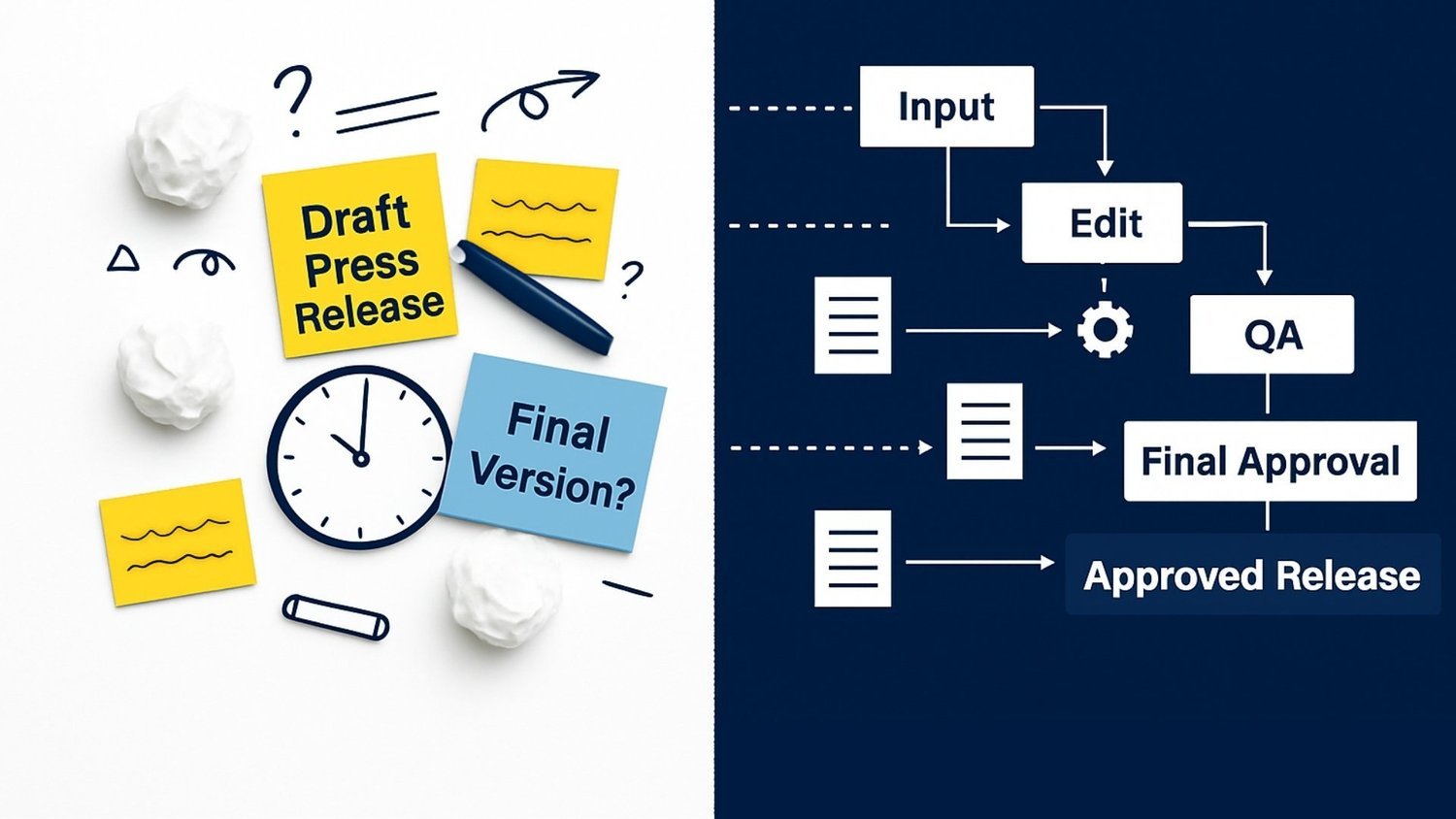
The writer who fills the gaps by guessing, without saying so, commits the failure we find inside most agency workflows: drafting before the substance is agreed. Every silent guess must be spotted by the client, argued over, then redrawn, at your senior people's hourly cost.
There is a Chinese idiom for the way out: pao zhuan yin yu, throw out a brick to draw back jade. You offer something rough, declared as rough, to draw out the valuable thing only the other side holds. The first draft is the brick. Its job is to draw back the jade, so build it to be corrected rather than to be right.
The best-guess method: two pages and a fifteen-minute call
We call this the best-guess method. It has three parts. The first two are pages; the third is a call.
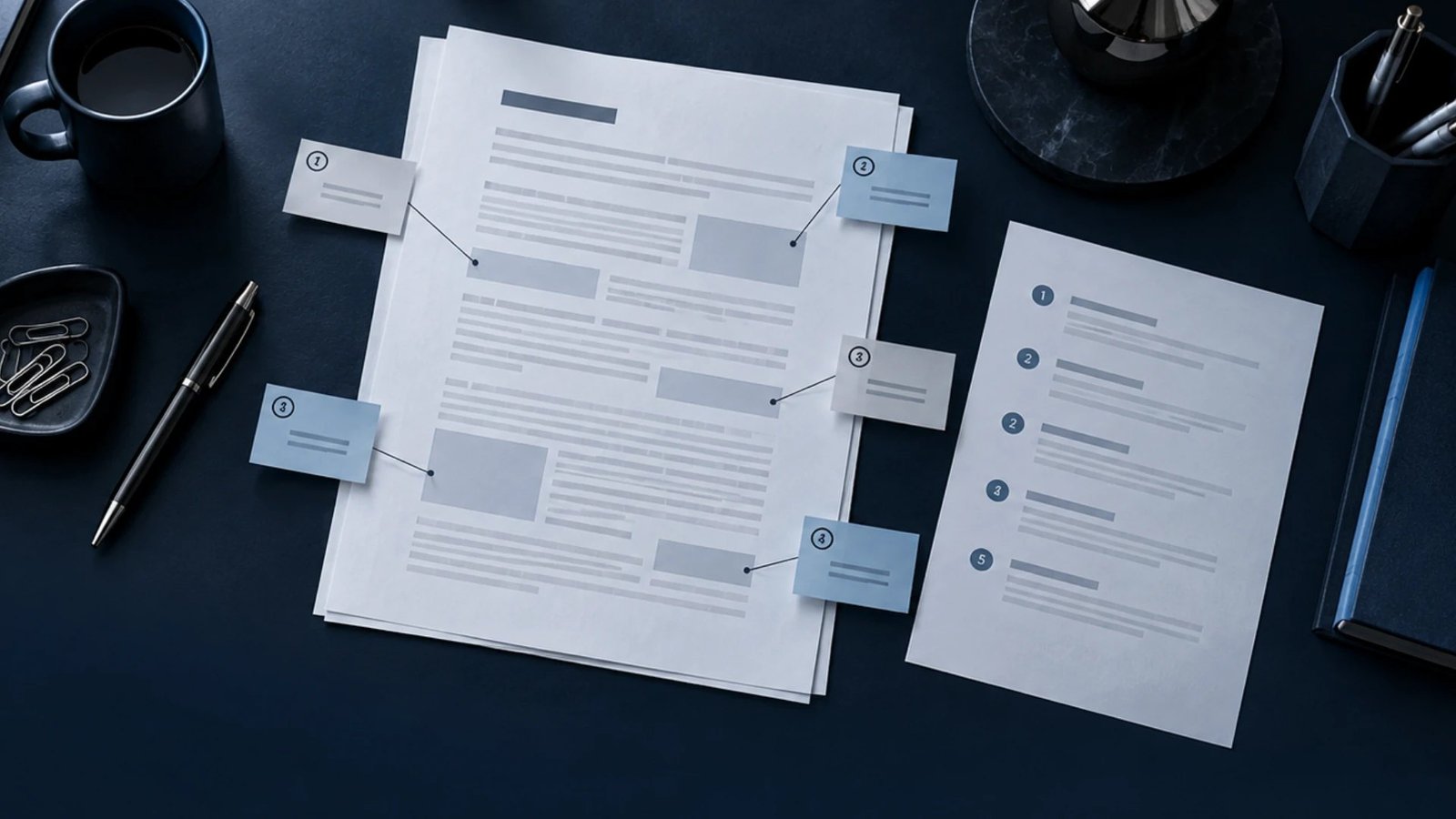
- The best-guess template. One page. Write the piece as if you had the brief, from everything you can already reach: the client's public record, what the company has said before, the last approved piece in the same format, the way they generally talk. Mark every missing fact as a shaded placeholder. Where they have no stated angle, propose one, labelled as a proposal.
- The question page. One page of numbered questions, each tied to a placeholder or a proposed angle on the page beside it. The template is what makes them answerable. A question sitting next to a visible gap reads as "fill this", where the same question in a blank email read as homework.
- The voice interview. Book fifteen minutes. Walk the client through both pages and ask the questions aloud, in order. He never types a word, because he was never going to. Record the call, transcribe it, and treat his spoken corrections as the brief you could not get on day one.
The framing you send with the two pages does the work, and it runs in four lines. Here is the shape of it, our best guess of what we think it is. Here are the questions. Give us fifteen minutes on the phone, and your answers let us change the angle and make it yours.
The release we drafted last week ran the two pages, ten questions in four groups, on an announcement whose facts were not yet final. The answers dropped into their slots as they arrived.
What the interview gives you, and what a silent client is telling you
The interview is where the guessing ends. Before it, the angle on the page is yours, a proposal wearing the client's format. After it, you hold real client feedback in the client's own words, and the next version's angle is written from what they want rather than what you assumed.
The rework that usually lands at the end of a job happens in fifteen minutes at the start. One limit is harder to hear. The best-guess method retrieves substance that exists but will not surface on request. It cannot create substance that was never there. A client who sits through the fifteen minutes and returns no correction, no preference, nothing, has also answered you.
To be honest, that is the reply the Reddit thread circled without landing on. Nobody should invent the client's opinions, because an invented opinion fails at the editor's desk with the client's name on it. When the brick draws back nothing, the counsel is that there is no piece yet, and saying so early is part of what the client pays a senior for.
What to do the next time the brief is unclear
Run the same loop on every unclear brief. Build the prototype, the best-guess template plus the question page. Send it across, explain the method, ask for the fifteen minutes. Take the answers back, fill it up, then fill it up again as later answers arrive.
A bad brief is a process problem, and a process can be redesigned. That is our work at Mekong Bridge Advisory: rebuilding how recurring deliverables get produced so they stop waiting on a brief nobody was going to write.
Gabriel Tan is the founder of Mekong Bridge Advisory, the lean consultancy for PR and IR agencies.
info@mekongbridge.com | www.mekongbridge.com